Do you believe that organizations in the Bahamas must intentionally align people strategy with artificial intelligence to stay competitive in a rapidly evolving workplace?
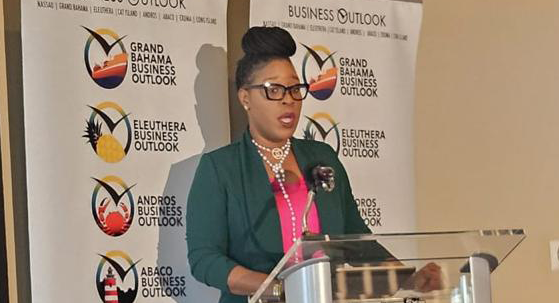
At the recent Bahamas Business Outlook, Keshala Knowles, Group Vice President of Human Resources, delivered a timely presentation discussing the very thing many organizations are running from. “HR and AI: The Future Landscape of Work.” Knowles highlighted the shift toward strategic HR transformation, where HR leaders must now anticipate emerging workforce needs and ensure that people’s strategies align with digital transformational goals. She pointed to the growing role of AI powered workforce analytics, which now allows leaders to anticipate turnover, identify skills gaps, strengthen succession planning, and better support workforce flexibility.
You may wonder…AI has been around for so long or why does this even matter? Well, I believe that the Bahamas leads in so many industries across the region, take Telecoms for example… so why not take a bite out of the AI industry and lead there also?
At the heart of her presentation was a strong reminder that artificial intelligence should enhance human potential, not replace it. She explained that AI is already improving employee experience through personalized career development, hybrid work models, and more purpose driven workplace environments. However, she stressed that ethical and responsible AI use must remain a priority, with transparency and fairness built into every stage of adoption.
When asked what inspired the topic, Knowles shared that she recently attended a Chief Human Resources Officer conference with global HR leaders from Singapore, the UAE, Switzerland, the United States, India, and Taiwan. Across markets and industries, one theme kept surfacing. The integration of HR and AI is quickly becoming a defining factor in organizational performance.
Globally, she noted, automation is improving productivity, enhancing customer experience, increasing operational efficiency, and reducing repetitive tasks. This exposure prompted her to consider how similar progress can be thoughtfully applied within the Bahamian workforce.
Looking ahead, Knowles described the future workforce as a “hybrid model where humans and AI work together.” In this environment, most roles will be AI assisted, routine tasks will continue to be automated, and demand for digital, data, and analytical skills will rise. At the same time, human capabilities such as judgment, innovation, strategic thinking, and ethics will become even more valuable.
She also introduced the C.H.A.T Competency Framework as a practical guide for organizations preparing for AI adoption. The framework focuses on change management, human centered ethics, analytics and workforce planning, and technology literacy. Together, these pillars aim to help businesses build workforces that are both technologically capable and people focused.
Knowles acknowledged that AI adoption is not without challenges. Risks such as skills polarization, which is the hollowing out of middle-skill jobs due to automation, resulting in a workforce split between high-skill, high-wage roles and low-skill, low-wage, service-oriented jobs. digital exclusion, over reliance on foreign technology, and privacy concerns must be carefully managed. This is why, she emphasized, strong human oversight remains essential.
She pointed to global examples for context. Singapore uses AI to guide national skilling policies. Estonia has embedded AI into public services to improve efficiency and transparency. The UAE continues to drive the national AI strategy through leadership level commitment. The common lesson is that successful AI adoption starts at the top and must be built with people in mind.
As conversations around workforce transformation continue, Knowles expressed her interest in collaborating with industry leaders and policymakers to help shape a future-ready Bahamian workforce. Her message was grounded but optimistic:
AI is not here to replace people. It is here to amplify what people can do best.
 Back to CB Journal